

Rosella Namok’s paintings invite viewers to look beyond colour and texture. Her work draws on the landscapes, waterways, weather, community and everyday experiences connected to life around Lockhart River in Far North Queensland.
Across more than three decades of painting, these influences have become part of a distinctive contemporary visual language. Layers of paint, expressive marks and strong colour create surfaces that can suggest movement, atmosphere and place while leaving room for individual interpretation.
For collectors, understanding the ideas and experiences that inform Namok’s work can add another dimension to viewing an original painting.
Country, Place and Everyday Life
Lockhart River and its surrounding environment have remained important reference points throughout Rosella Namok’s artistic practice. Her paintings reflect an intimate connection with the places, activities and experiences that form part of life in the region.
Rather than simply presenting a literal landscape, Namok often translates these experiences through colour, gesture, texture and repeated marks.
Her work can evoke:
- Country and the surrounding landscape
- Rivers, beaches and coastal environments
- Fishing and other everyday activities
- Changing weather and atmospheric conditions
- Night skies and moonlight
- Plants and natural forms
- Community and shared experiences
These recurring subjects provide a way into her work without reducing each painting to a single interpretation.
Water, Rain and the Changing Landscape
Water is a recurring presence in Namok’s work. Her titles and bodies of work reference rain, deep sea environments, river mouths, fishing and other aspects of life connected to the water.
Works such as Stinging Rain, Deep Sea and River Mouth demonstrate how environmental experiences can become starting points for paintings that are both recognisable in subject and highly expressive in execution.
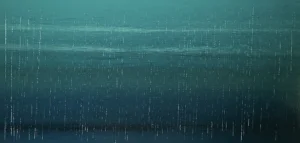
The movement of water and changing weather can also be reflected in the physical qualities of the paint.
| Theme | How it appears in Namok’s work |
| Rain | Layered marks and atmospheric surfaces can suggest changing weather |
| Deep sea | Colour, scale and movement evoke underwater and coastal environments |
| River mouths | Waterways and fishing provide recurring subject matter |
| Fishing | Everyday activity becomes part of a broader visual composition |
For viewers, this creates an opportunity to consider not only what a painting depicts, but how the artist has translated an experience of place onto the canvas.
The Night Sky and Connection to Place
The night sky is another recurring theme within Namok’s work. Her Taywai (Full Moon) series draws attention to the moon, darkness and the atmosphere of the night.
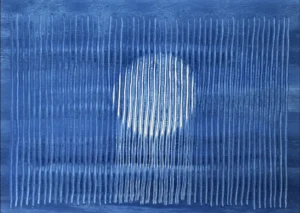
Night-time environments can transform the way familiar places are experienced. Light becomes more limited, colours shift and the landscape takes on a different visual character.
Namok’s treatment of these subjects demonstrates how a familiar environment can provide an ongoing source of artistic exploration.
Key elements include:
- Full moon and night skies
- Changing light and atmosphere
- Darker and contrasting colour palettes
- The relationship between sky, land and water
- A sense of place created through colour and gesture
Together, these elements allow Namok to explore the night as more than a change in light, creating paintings that capture the atmosphere and sense of place associated with familiar environments after dark.
Fishing and Life Around the Water
Fishing and waterways appear repeatedly across Namok’s paintings. These subjects connect the work to everyday experiences rather than presenting Country as something distant or purely scenic.
The River Mouth works, for example, reference a place where waterways meet the sea and where fishing forms part of everyday life.
In works such as River Mouth – Fishing Poles III, simple elements associated with fishing become part of a larger visual composition.
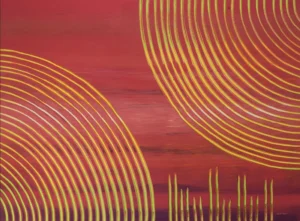
The paintings can be considered through several interconnected elements:
- Fishing and everyday activity
- Rivers and coastal environments
- Lines suggesting fishing poles or movement
- Colour and texture
- The relationship between people and place
This combination of everyday experience and contemporary abstraction is an important part of understanding Namok’s artistic approach.
Plants, Trees and the Natural Environment
The natural environment around Lockhart River also appears through references to trees and plant life. The Unchii Tree (Paper Bark) works are an example of how a particular natural form can become the focus of an artistic series.
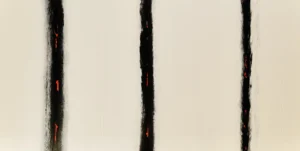
These works demonstrate that Namok’s relationship with Country does not rely solely on broad landscape imagery. Individual elements within the environment can also become important subjects.
| Natural influence | Artistic consideration |
| Trees and plant life | Individual natural forms become subjects |
| Country | Place provides an ongoing source of inspiration |
| Landscape | Environment is interpreted rather than simply reproduced |
| Natural textures | Layered paint and mark-making create physical surfaces |
Through changes in colour, texture, scale and mark-making, a familiar natural form can be explored in different ways.
Colour as a Way of Expressing Experience
Colour plays a central role in Namok’s paintings. Her use of strong and often contrasting colours contributes to the emotional and atmospheric quality of her work.
Colour can help establish a sense of heat, water, darkness, sunlight or changing weather. It can also draw attention to movement and individual elements within a composition.
Rather than treating colour simply as a way to reproduce the appearance of a landscape, Namok uses it as part of the language of the painting itself.
For collectors, this is one of the qualities that makes viewing an original work particularly significant.
- Colour contributes to atmosphere
- Contrasts can create movement
- Colour relationships help define different areas of a composition
- Strong palettes can influence how a work interacts with an interior
- The physical surface can change how colours are experienced in person
The Marks Beneath the Surface
One of the most recognisable aspects of Namok’s technique is her use of finger-dragged marks across layered paint. She developed a distinctive approach to applying and manipulating paint, creating lines and patterns directly across the surface.
The resulting marks can suggest movement, water, landscape and other elements of the environment while also becoming an important visual feature in their own right.
Her technique is closely connected to the physical process of painting.
| Technique | Contribution to the work |
| Layered paint | Creates depth and a sense of accumulated surface |
| Varied texture | Adds physical presence to the painting |
| Finger-dragged marks | Creates distinctive lines, patterns and movement |
| Strong colour | Builds atmosphere and visual impact |
| Gestural application | Makes the act of painting visible within the finished work |
Rather than relying solely on brushes or conventional forms of application, Namok creates surfaces with visible gesture and movement. This gives her paintings a strong physical presence that photographs and reproductions cannot fully communicate.
Stories That Remain Open to Interpretation
It is important not to assume that every element in a Rosella Namok painting carries one fixed meaning. Her work draws from lived experience, environment and community, but the visual language she creates also allows viewers to engage with the paintings individually.
A collector might respond to the colours, another to the sense of movement, while someone else may connect more strongly with the references to Country or water. This openness is part of the experience of collecting contemporary art.
The way an individual work can be approached includes:
- Its title and subject
- The colours and visual relationships
- The physical texture of the surface
- The scale and composition
- The series or body of work
- The environmental experiences it may reference
- Its place within Namok’s broader artistic practice
The title, subject, materials, scale and context of a work can all contribute to how it is understood. At the same time, an original painting can continue to reveal different qualities over time.
Understanding the Stories Behind an Original Painting
For collectors considering an original Aboriginal painting, understanding the artist’s background and creative practice can provide valuable context. With Namok’s work, that context includes her connection to Lockhart River, her relationship with the natural environment, her experiences within the local community and the distinctive techniques she has developed throughout her career.
When considering an individual work, collectors may wish to explore:
| Consideration | Why it matters |
| Title and subject | Provides context for the work |
| Series or body of work | Places the painting within Namok’s wider practice |
| Materials and techniques | Helps explain its physical qualities |
| Colour and texture | Contributes to atmosphere and visual impact |
| Environmental references | Connects the work to place and experience |
| Career context | Shows where the work sits within Namok’s artistic journey |
| Provenance | Provides important information about an artwork’s history |
| Certificate of Authenticity | Supports the authenticity of the original work |
These details can help place an individual painting within the larger story of the artist’s practice.
Explore the Stories Through the Collection
Rosella Namok’s paintings offer more than visual representations of the places and experiences that have influenced her. They transform those influences into a contemporary visual language built through colour, texture, gesture and layered paint.
From rain and water to night skies, fishing, trees and everyday life around Lockhart River, recurring subjects provide a window into the environments and experiences that have shaped her work.
For collectors, exploring these themes can make each original painting a starting point for a deeper understanding of Namok’s artistic journey.
Explore the Rosella Namok Collection to view available original works, or learn more about Rosella Namok and the artistic practice behind the paintings.